

Though Sofia is the capital of Bulgaria, many tourists actually skip it and head straight to the beaches if there are cheap flights to the airport near the coast. Among those tourists who stop by Sofia, a lot of them are only there because flights to Sofia can be way cheaper. After spending a day or two at the capital, they find their way to the beaches. The coast is about 6 hours away from the capital. Since it takes a while to get there, I figured I might as well check out some places in between. When i was checking out the bus routes, all the buses from Sofia to the coast make a stop at Plovdiv. I’ve read about it while I was looking for places that looked interesting in Bulgaria. And since it’s easy to get there from Sofia, I went ahead and purchased a ticket at the central bus station.
There were many available bus lines running this route. A number of them, especially the cheapest ones, do not appear online when you search for bus schedules. If you’re heading to Plovdiv, take note of which bus station you’ll be dropped off at since there are three. Most buses from Sofia stop at the “jug” or South bus station. According to locals it’s the best one in terms of location since the others are located in shady neighborhoods. Alternatively you can take a train but it takes longer to get there (about 1 or 2 hours longer) . And it’s not much cheaper too, so you wouldn’t really save much money if you take the train. I’ve met a number of locals in Bulgaria and none of them recommended taking the train. The train station is next to another bus station called Rhodope. Most buses here head to the Rhodope mountain villages. This is the bus station you need to get to if you’re planning on doing a day trip to the villages.
I first realized the extent of the language barrier in the country when I was trying to buy a bus ticket to Plovdiv. As I’ve said on my previous post, most young Bulgarians speak English well. I can’t say the same about the old folks though. And it turns out, a lot of the people selling bus tickets seem to be in their late 30s at least. And they don’t speak English well, even the lady behind the information counter. Now I can’t blame them for not speaking English well— I’ve been to a number of countries where the locals don’t even speak a word of English. The difference is, those people were still friendly even if you can’t seem to understand each other. I wish i could say the same about those ladies manning the ticket booths in Sofia. Once they realize you don’t speak the local language, it’s as if you turned on some sort of switch. Their smiles disappear and they immediately turn grumpy. Good thing one of the younger ladies could speak basic English, and she was quite friendly too— a complete contrast to the grumpy old ladies surrounding her. She was able to direct me to where I should purchase a ticket to Plovdiv.
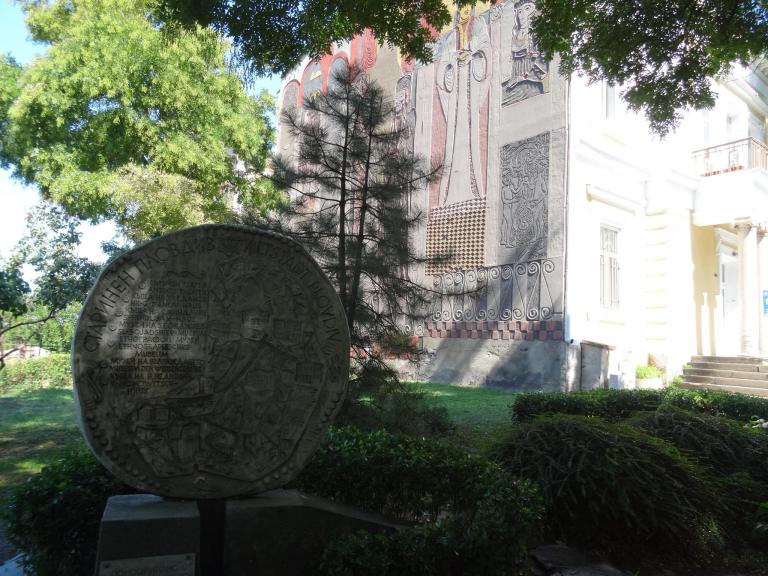
So the bus ride to Plovdiv was quite pleasant. The south bus station wasn’t too big, thus it wasn’t really crowded. I was able to find the exit easily. I arrived at around 3 PM, the sun was still up and it was scorching hot so I decided to hail a cab. I didn’t spend a lot of money in Sofia so I thought of splurging a bit for some comfort. And just my luck the driver couldn’t understand English. I showed him the address, turns out he couldn’t read English too lol. I hailed another cab and it was the same scenario all over again. I said f*ck it. What’s a 30 minute walk in this heat anyway. I actually ended up walking for more than 30 minutes. By the time I arrived at the hostel located in the old part of town I was drenched in sweat.
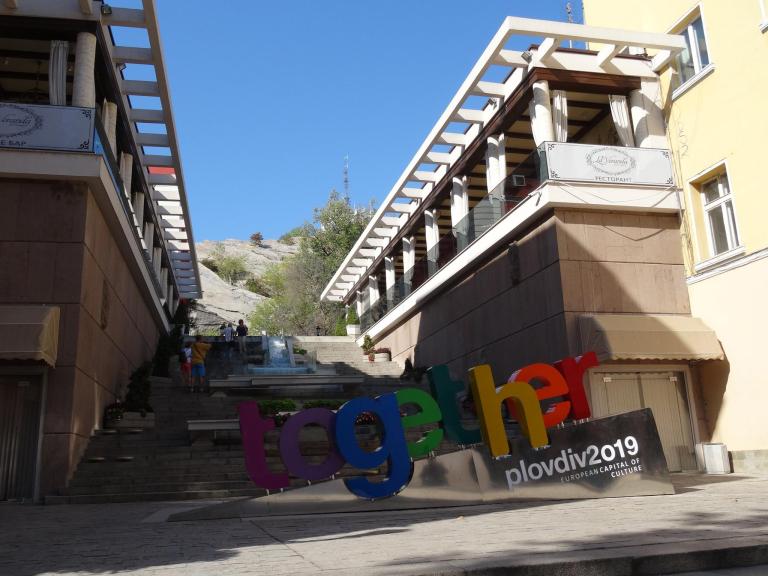
Stopping by Plovdiv for two days was a great decision. In terms of ancient architecture, it has much more to offer than Sofia. It was once a Thracian settlement before it became a Roman city, and after that it eventually fell into Ottoman hands. It has a couple of centuries worth of history, and you can see all that in the varied architecture. it’s actually one of the cities nominated to be the European Capital of Culture in 2019. When you set foot in Plovdiv and walk through its streets, you would have no doubt that the city deserves that honor. And since it’s not as big as Sofia, it’s not as chaotic.


In the old part of town, the vibe is laid back. If you want to be near the attractions, stay in the historic center. The most impressive one is the Ancient Roman Theater. It’s remarkably preserved. In fact, it’s still being used for a variety of events until the present day. Also of note is the Roman Stadium located near the tourist information center. I’m not really a fan of its location right smack in the middle of a shopping area, but the contrast of this ancient stadium with its surroundings makes it pop out. It’s located beneath modern Plovdiv, and you can see it from the viewing area above. I’d recommend going down and taking a closer look. It’s definitely worth checking out. The entire old part of town is an attraction in itself. You’ll see a number of churches and mosques, plus a couple of museums too. There was supposed to be an ancient roman forum somewhere but it appears to be in an area that is undergoing some restoration. it’s supposed to be by the main post office, but when i got there it seemed to be in a walled off area and you can’t see much between the gaps on the walls. If you search for it online, you’re gonna see pictures of the Roman Theater and the Roman Stadium. Those are definitely not part of the Roman Forum. When you ask locals, it’s gonna add to the confusion because once they hear you utter the word Roman, they are going to think you’re asking about the Roman Theater or the Stadium. Only when you show pictures of the forum would they realize that you’re looking for something else.


If you’ll be coming from Sofia and you plan on heading to the coast, stop for a day or two in Plovdiv. If you have a great interest in ancient cultures, you’ll definitely love the place. And even if you aren’t, you might as well stop by since it’s on the way. The city is teeming with history. There’s a good chance that you’ll be pleasantly surprised with what you’ll see.
 no roads to follow
2 thoughts on “Plovdiv: A Potpourri of Cultures”